
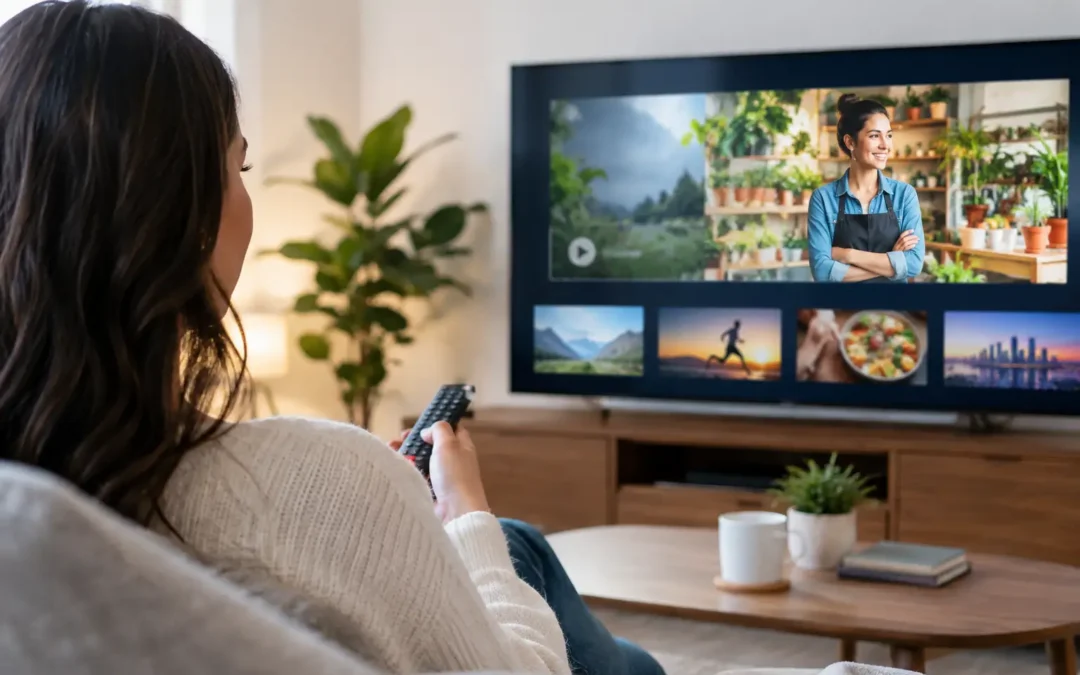
A 30-second television commercial used to be out of reach for many local businesses. The cost of production, broad market coverage, and limited reporting made traditional TV a difficult fit for a controlled marketing budget. Streaming advertising platforms have changed that equation. They give small businesses a practical way to place professional video ads in front of the households, customer types, and service areas that matter most.
For a Hampton Roads contractor, medical practice, restaurant, or retail business, this is not about advertising to everyone watching television. It is about appearing where likely customers are already watching shows, live sports, movies, and news through connected TVs.
What Streaming Advertising Platforms Actually Do
Streaming advertising platforms deliver video ads through internet-connected television services and apps. Viewers may watch through a smart TV, Roku, Apple TV, gaming console, tablet, or phone. The ad experience looks familiar: a short commercial plays before or during programming. The difference is in how the audience is selected and how results are measured.
Rather than buying a television schedule across an entire region, a business can choose a geographic area, audience characteristics, viewing environment, and campaign timing. Depending on the platform and available inventory, targeting can include ZIP codes, household interests, age ranges, shopping behaviors, or people who have previously visited a business website.
That level of control makes streaming TV advertising especially useful for businesses that want local awareness without wasting spend on customers outside their service area. It also gives owners a clearer view of impressions, completed video views, website visits, and other campaign activity than traditional TV has historically provided.
Why Local Businesses Are Moving Budget to Streaming
Consumers have not stopped watching television. They have simply added more ways to watch it. Many households now split their viewing between cable, live streaming services, and on-demand apps. If your marketing plan only reaches one of those environments, part of your audience may never see your message.
Streaming can help close that gap while keeping the campaign focused. A local business can run video advertising to audiences within a reasonable driving distance, then pair it with Google Ads, social media, or digital radio to create more consistent recognition. When people see the same business in several trusted places, the name is more likely to come to mind when they need the service.
The value is not only reach. Streaming offers an opportunity to use video well. A short, clear commercial can show your people, location, products, process, and customer experience in a way that a search ad or social post cannot fully convey. For service businesses, that can reduce hesitation before a prospective customer ever calls.
The Advantages That Matter Most
1. Better geographic control
Most small businesses do not need national exposure. A roofing company may serve a group of counties. A restaurant may draw customers within 10 miles. A regional healthcare provider may want to build awareness in several cities without spending on distant markets.
Streaming campaigns can be built around those realities. Geographic targeting helps keep impressions concentrated on the communities where your business can actually serve customers. It is not perfect down to every individual address, but it is far more flexible than purchasing broad television coverage.
2. A more defined audience
A good campaign begins with a simple question: who is most likely to need what you offer? A family law firm, senior living community, auto dealer, and pediatric dental office may all serve the same city, but they should not speak to the same audience in the same way.
Streaming advertising platforms can help narrow delivery based on relevant audience signals. The best approach is usually not to target every possible category. Too many restrictions can shrink available reach and drive up cost. Start with the geography, customer profile, and business goal that matter most, then adjust using actual campaign results.
3. Television-level presence without a television-sized commitment
Video creates perceived credibility. A well-made ad can make an independent business feel established, prepared, and easy to trust. That does not require a large national production budget.
What it does require is a message that is clear in the first few seconds. Viewers need to understand who you are, what you do, where you serve, and what they should do next. Strong visuals help, but clarity does more work than flashy effects. A local owner on camera, real staff, a recognizable storefront, and a direct call to action can often outperform a generic commercial.
4. Reporting that supports better decisions
Marketing should not feel like writing a check and hoping for the best. Streaming reporting can show how many times ads were delivered, how often viewers watched them through, what locations received delivery, and whether people took actions such as visiting your website.
Those numbers need context. A completed video view is encouraging, but it is not a sale. Website traffic is useful, but it is not automatically a qualified lead. The right question is whether the campaign is creating enough awareness and response to support your broader business goals. A managed campaign should connect the reporting to decisions, not just send a spreadsheet full of metrics.
Choosing Between Streaming Advertising Platforms
There is no single best platform for every business. Some services offer broad reach across multiple streaming apps. Others are closely associated with a particular publisher or viewer base. Inventory, targeting options, minimum budgets, and reporting can vary.
Before choosing a placement, consider four practical factors:
- Your service area: Make sure the platform can reliably deliver impressions in the cities, counties, or ZIP codes you need.
- Your audience: Consider household makeup, viewing habits, and the life stage most connected to your offer.
- Your creative: Confirm that your commercial meets the platform’s length, format, and quality requirements.
- Your budget and timeline: Give the campaign enough time and frequency to build recognition rather than judging it after a few days.
It also helps to avoid choosing based only on a familiar app name. A business may like the idea of appearing on a specific streaming service, but a broader network of placements could provide more efficient local reach. The reverse can also be true when a particular publisher aligns closely with your intended audience. The media plan should follow the goal, not the other way around.
What a Successful Campaign Looks Like
A successful streaming campaign does not always produce an immediate online form fill. This is especially true for high-consideration services such as home improvement, legal services, healthcare, financial planning, or commercial work. People may see the ad now and call weeks later when the need becomes urgent.
That is why message consistency matters. Use the same business name, visual style, offer, and core promise across your website, search ads, social channels, and streaming commercials. If a viewer searches your name after seeing the ad, they should find a website that confirms what they just watched. If they call, your team should know what service or promotion the campaign is emphasizing.
Set realistic expectations before launch. Brand awareness takes repetition. A short campaign can support a seasonal event or promotion, but ongoing visibility often serves local businesses better. The goal is to become familiar before a customer begins comparing options.
Common Mistakes to Avoid
The most common mistake is treating streaming like a one-time experiment with no plan for follow-up. A video ad should lead somewhere useful: a clear website page, a dedicated offer, a phone number that is answered, or a location people can easily find.
Another mistake is trying to say too much. A 15- or 30-second spot cannot explain every service, credential, and special offer. Choose one primary message. A plumbing company might focus on emergency response, while a restaurant promotes a new catering service. Give viewers one reason to remember you.
Finally, do not separate media buying from creative strategy. The strongest targeting cannot rescue an unclear commercial, and a beautiful video cannot compensate for reaching people outside your market. Community Focus helps businesses bring creative production, audience planning, and campaign management together so the message and placement support the same outcome.
A good next step is not to ask whether your business is “big enough” for streaming TV. Ask which customers you need to reach, what they need to hear, and whether your current marketing shows up where they spend their time. A focused campaign can make that answer much clearer.
Recent Comments