
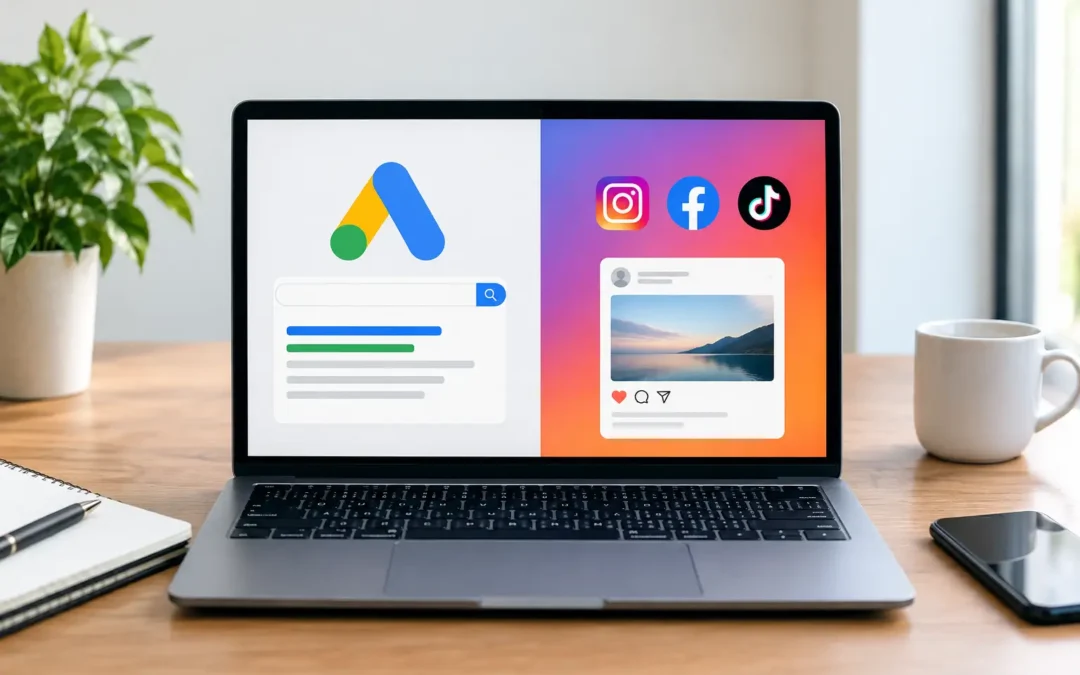
A homeowner with a leaking water heater and a family scrolling through Facebook after dinner are both potential customers. But they are in very different moments. That is the practical difference behind Google Ads versus social ads: one channel helps you show up when people are actively looking, while the other helps you earn attention before they begin searching.
For a small business, this is not a question of which platform is universally better. It is a question of where your customers are in the buying process, what you need your marketing to accomplish, and how much time and budget you can dedicate to building momentum. The right answer may be Google Ads, social ads, or a focused mix of both.
Google Ads Versus Social Ads: The Core Difference
Google Ads is intent-based advertising. Your business can appear when someone searches for a product, service, or problem you solve. A person typing “emergency plumber near me,” “best pediatric dentist in Norfolk,” or “commercial roofing estimate” is showing clear interest right now. Google Ads puts your message in front of that person at a high-value moment.
Social ads are interruption-based, but that does not make them less useful. They reach people while they are spending time on platforms such as Facebook, Instagram, LinkedIn, TikTok, or other social channels. These people may not be searching for your business today. A well-targeted ad can introduce your brand, demonstrate your work, promote an offer, or keep you familiar when they need your service later.
Think of Google as answering demand and social media as helping create it. A strong local marketing plan often needs both functions, but not necessarily at the same budget level or at the same time.
When Google Ads Makes the Most Sense
Google Ads is often the first choice when your business depends on immediate leads. Service businesses with urgent or high-intent customer needs tend to see the clearest path to results. This includes contractors, legal offices, medical practices, auto repair shops, restoration companies, home service providers, and businesses with appointment-based services.
If a customer is searching, they have already taken an important step. Your job is to show a relevant ad, bring them to a useful landing page, and make it easy to call, request an estimate, book an appointment, or visit your location.
Google Ads can also be valuable when you have a specific service with clear search demand. A local HVAC company may want more heat pump installations before a seasonal rush. A restaurant may want to promote catering. A business-to-business company may want to reach people searching for a specialized solution. In each case, relevant keywords allow the campaign to focus on people who are already raising their hands.
The trade-off is competition. Popular searches can be expensive, especially in industries where one new customer has significant value. “Personal injury lawyer,” “water damage restoration,” and “roof replacement” may cost much more per click than less competitive searches. That does not automatically make them poor choices. It means the campaign needs careful budgeting, conversion tracking, geographic targeting, and ongoing management.
A click is not the same as a lead. If your website is slow, your phone number is hard to find, or your contact form creates friction, even well-managed Google Ads can waste budget. This is why paid search works best when the ad, website, and follow-up process work together.
Google Ads is a strong fit if you need:
- Calls, quote requests, appointments, or store visits in the near term.
- Customers who are actively searching for a service or product.
- Measurable lead activity tied to specific keywords and locations.
- Local visibility in areas where organic search rankings may take time to build.
When Social Ads Makes the Most Sense
Social advertising is especially useful when people need to see, understand, or remember your business before they are ready to act. It gives local businesses room to tell a story through images, short videos, customer testimonials, special offers, behind-the-scenes content, and community involvement.
A boutique fitness studio, local retailer, restaurant, salon, real estate professional, event venue, or nonprofit may find social ads particularly effective. These businesses often benefit from visual content and repeated exposure. A short video of a finished kitchen remodel, a new menu item, or a client success story can give someone a reason to stop scrolling and pay attention.
Social ads also provide targeting options that are useful when people are not searching with clear keywords. You can reach audiences by location, general interests, life stages, job roles, and engagement with your existing social presence. The exact options vary by platform and change over time, so targeting should be used thoughtfully rather than treated as a guarantee.
The challenge is that social users are not always ready to buy. A person may watch your video, like a post, or click to your website without becoming a customer immediately. That can make social campaigns look less effective if you only measure last-click leads. In reality, social advertising often contributes earlier in the decision process by building awareness and credibility.
That is why the creative matters so much. A plain sales message can be easy to ignore. Strong social ads usually show something real: your team, your finished work, your customers, your local knowledge, or a clear reason to take the next step. Businesses that have little visual content may need help with photos, video, and ad creative before social ads can perform at their best.
Match the Channel to Your Customer’s Timeline
The fastest way to choose between channels is to consider how people buy from you.
If customers usually act quickly because they have a problem to solve, put more weight behind Google Ads. Someone who needs towing, appliance repair, pest control, or urgent dental care is unlikely to wait for the right social post to appear. They will search.
If customers take time to compare options, social ads can help keep your business visible during that consideration period. Remodeling projects, real estate services, cosmetic treatments, financial services, wedding vendors, and higher-priced retail purchases often require trust before action. People may see your social ad several times, visit your website, read reviews, and eventually search your business by name.
Some businesses have both types of demand. A landscaping company might use Google Ads for people searching for lawn care now, while using Facebook and Instagram ads to promote seasonal design projects, before-and-after transformations, and early booking offers. That combination captures immediate demand while creating future opportunities.
Budget Decisions for Small Businesses
A limited budget does not require spreading money evenly across every platform. In fact, doing too much at once is a common reason campaigns underperform. A small business is usually better served by starting with one clear objective and building from there.
If leads are the immediate priority, a tightly targeted Google Ads campaign may be the sensible starting point. Focus on your best service areas, your most profitable services, and the times when your team can respond quickly. It is better to generate fewer qualified inquiries than a high volume of poor-fit clicks.
If visibility is the priority, social ads can stretch a modest budget across a local audience and provide repeated exposure. This can be helpful for new businesses, businesses entering a new neighborhood, or established companies that need stronger name recognition. The goal should be more specific than “get likes.” Ask whether you want video views, website visits, event registrations, messages, offers claimed, or customer list growth.
Your marketing budget should also account for creative and management. Google Ads requires keyword research, negative keywords, bid oversight, conversion tracking, and landing-page review. Social ads require audience planning, fresh visuals, compelling copy, testing, and response management. The media budget matters, but so does the work that makes every dollar more accountable.
Use Both Channels Without Duplicating Effort
When Google Ads and social ads work together, each can make the other more effective. Social advertising can introduce your business to people in your service area, show the quality of your work, and build familiarity. Later, when those people search Google, they may be more likely to recognize and trust your name.
Google Ads can also reveal what customers care about most. Search terms, calls, and conversion data can inform your social content. If people frequently search for “same-day service,” “financing,” or a particular product category, those insights can shape better social messages and videos.
A practical approach is to use Google Ads for high-intent services and social ads for awareness, education, seasonal promotions, and remarketing to people who have already visited your website. The message should remain consistent across both channels. If your Google ad promises a free estimate, your social ad and landing page should not tell an entirely different story.
Measure What Matters to the Business
It is easy to get distracted by impressions, clicks, likes, and views. Those numbers can be useful, but they are not the finish line. The measurements that matter most depend on your goal: qualified phone calls, booked appointments, estimate requests, purchases, foot traffic, or revenue from new customers.
Make sure someone answers the phone, follows up on web inquiries, and records which leads become customers. Advertising can create opportunities, but a delayed callback or missed inquiry can erase the value of a strong campaign. For many small businesses, improving lead follow-up is one of the quickest ways to improve marketing results without increasing ad spend.
Community Focus helps businesses bring the pieces together, from ad creative and campaign management to website support and local audience strategy. The goal is not to put your business everywhere. It is to put your budget where it can do the most useful work.
Start with the customer you need most, the action you want them to take, and the moment they are most likely to act. That clarity will tell you whether to meet them in a Google search, earn their attention on social media, or do both with a plan that respects your time and your budget.
Recent Comments