
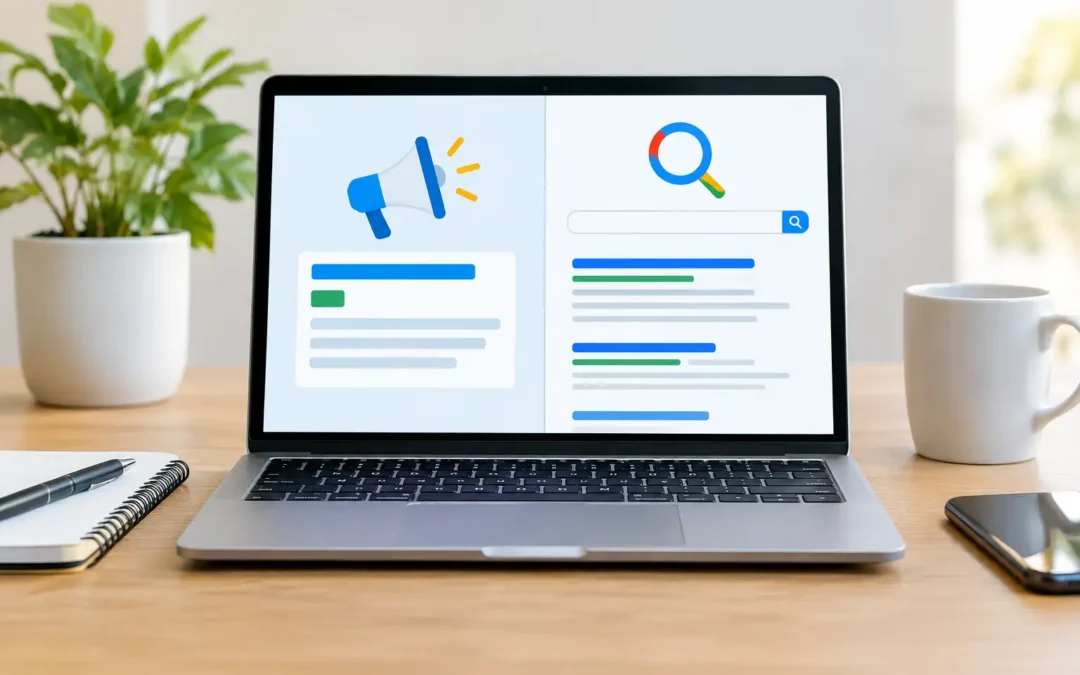
Google ads versus organic search is one of the first decisions a small-business owner faces when leads are slow and the phone needs to ring. You may be asking a practical question: Should we pay for visibility now, or invest in showing up naturally over time? The answer is rarely one or the other. It depends on how quickly you need results, how competitive your market is, and what your website can do once a potential customer arrives.
For a local business, search is valuable because it reaches people who are already looking for an answer. Someone searching for an emergency plumber, a nearby dentist, or a contractor who serves their neighborhood has a need right now. Your job is to appear at the right moment, with a clear reason to choose your business.
How Google Ads and Organic Search Work
Google Ads places paid listings prominently on relevant search results pages. You choose the services, locations, and search terms you want to target, set a budget, and pay when someone clicks your ad. A well-managed campaign can begin attracting qualified traffic shortly after it launches.
Organic search is the unpaid visibility your business earns in Google results. It comes from having a useful, technically sound website with service pages, locally relevant content, accurate business information, and a trustworthy reputation. You do not pay Google for each organic click, but earning and keeping strong positions takes consistent work.
Neither channel is automatically better. Paid search is rented visibility. When the budget stops, the ads stop appearing. Organic visibility is closer to an owned business asset: it can continue bringing visitors in, but it takes time and attention to build.
Google Ads Versus Organic Search: The Real Differences
The best choice becomes clearer when you compare the channels against the pressures most small businesses actually face.
Speed
Google Ads is built for speed. A new location, a limited-time offer, a seasonal service, or a gap in your sales calendar can all justify a paid campaign. If your ad, targeting, budget, and landing page are in good shape, you can start learning what drives calls and form submissions quickly.
Organic search is a longer play. A newer website may need months to build enough relevance and credibility to compete for valuable searches. That does not make it less worthwhile. It simply makes it a poor fit when you need leads this week.
Cost and control
With Google Ads, you control the daily or monthly spend, the service areas, the hours ads run, and the messages people see. That control is useful when every marketing dollar needs a job. It also requires management. Broad keywords, weak ads, or irrelevant clicks can use up a budget without producing meaningful opportunities.
Organic search has no per-click ad cost, but it is not free. Your investment may include website improvements, content, local search optimization, technical maintenance, and ongoing review of what customers search for. The difference is that the work can improve your site’s value beyond a single campaign.
Competition
In a less competitive local market, organic search may offer a realistic path to strong visibility for core services. In highly competitive industries, paid ads may be the most dependable way to appear above established competitors while your organic presence develops.
Google Ads can also become expensive when several businesses bid on the same high-intent searches. A law firm, home-service company, or medical practice may face higher click costs than a niche local retailer. The right question is not whether a click is cheap. It is whether the leads generated are profitable after your cost to acquire them.
Trust and staying power
Some searchers prefer organic listings because they see them as earned recommendations from Google. A strong organic presence can reinforce credibility, especially when your site answers common questions clearly and supports the same local message customers see elsewhere.
Paid ads still have a role in trust. An ad that precisely addresses a customer’s need, leads to a professional website, and makes it easy to call can be highly effective. The problem is not that an ad is paid. The problem is an ad that promises more than the landing page or business can deliver.
When Google Ads Is the Better First Move
Google Ads is often the right first move when timing matters more than long-term rankings. It can help a business test demand before expanding a service, fill appointment openings, support a new market launch, or capture urgent searches that cannot wait for SEO gains.
It is also a practical option when you want clearer campaign-level measurement. You can see which search terms trigger ads, which locations generate clicks, and which messages lead to calls or form submissions. That information can improve more than your ad account. It can shape the language on your website, social posts, and sales materials.
Paid search works best when the basics are ready. Your website should load well on mobile, make the next step obvious, and direct visitors to the exact service they searched for. Sending every click to a generic homepage forces customers to do extra work and can lower the value of your ad spend.
When Organic Search Deserves More Attention
Organic search should be a priority when you want steady visibility for the services your business plans to offer for years. It is especially useful for local companies that need to be found across many related searches, not just one high-value keyword.
For example, a roofing company may want visibility for roof repair, storm damage, inspections, replacements, and the communities it serves. A thoughtful website can create useful pages around each genuine service and location without turning into a collection of repetitive sales copy. Over time, that broad relevance can bring in visitors at many stages of the buying process.
Organic work also improves the customer experience after the click. Clear service pages, fast-loading mobile design, original photos or video, frequently updated business details, and helpful answers all make it easier for a prospect to decide. Even people who find you through an ad will often look for these trust signals before contacting you.
A Combined Strategy Usually Protects Your Budget
For many small businesses, the strongest approach is to use Google Ads for immediate opportunity while building organic search for durable visibility. The channels can support each other instead of competing for the same budget.
Paid campaigns reveal the language customers use when they are ready to act. That can guide website content and organic page priorities. Organic pages that perform well can reveal services or markets worth promoting through ads. And when your business appears in both paid and organic results, it can take up more space on the page and reinforce local recognition.
The mix should shift over time. A new business may rely more heavily on ads while its website earns traction. An established business with strong organic rankings may use ads selectively for competitive services, seasonal promotions, or geographic expansion. There is no prize for using every dollar in one channel.
Build a Search Plan Around Business Goals
Before choosing a budget, start with the result you need. Do you need more calls for a high-margin service? Are you trying to expand into a nearby city? Do you need to keep your calendar full during a slower season? A useful plan ties search activity to those outcomes rather than treating clicks as the goal.
Use these four questions to set priorities:
- How quickly do we need new leads?
- Which services produce the best revenue and repeat business?
- Can our website turn a visitor into a call, appointment, or request?
- How much can we spend to gain a customer and still make a healthy return?
Then measure what happens after the click. Calls, booked appointments, qualified forms, store visits, and revenue matter more than impressions alone. A campaign with fewer clicks may be the better investment if it brings customers who are ready to buy.
Small-business owners should not have to become search specialists to make a sound decision. Community Focus helps businesses align their paid advertising, website, local message, and ongoing marketing efforts so each part supports the next.
Start with the channel that solves your most immediate problem, but keep building the online presence that will still be working for your business months from now.
Recent Comments