
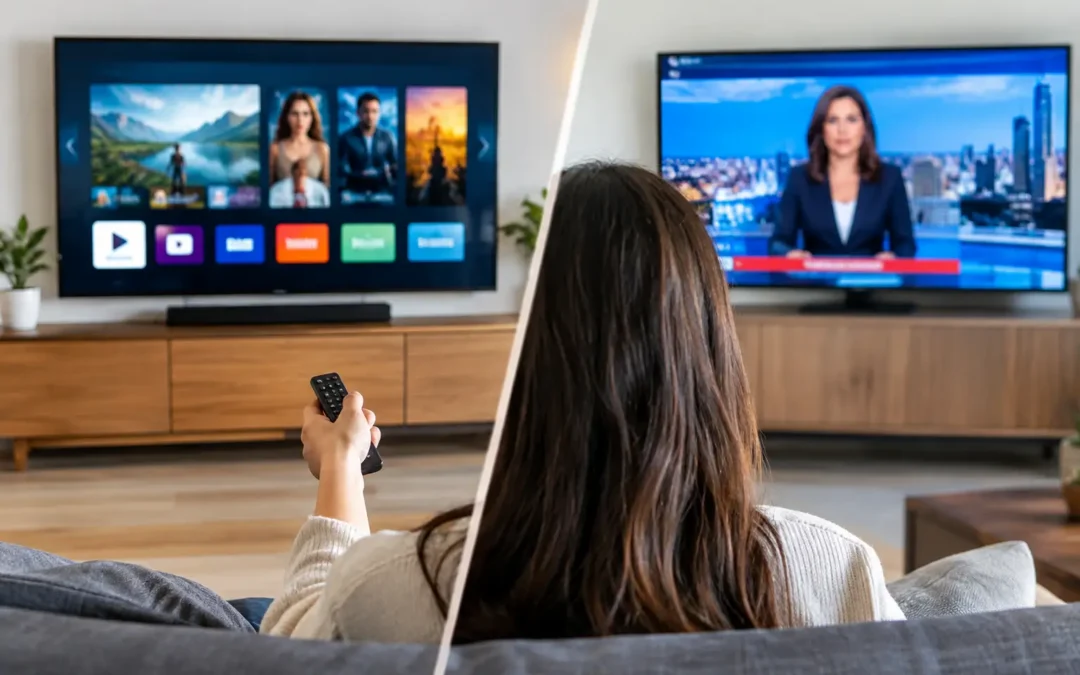
A local restaurant can run a television commercial that reaches thousands of households, then wonder why the dining room is not any fuller. That is the real question behind streaming ads versus cable television: not which format sounds more impressive, but which one puts your message in front of the people most likely to act.
For small businesses, television advertising is no longer a choice between a major cable buy and doing nothing. Streaming TV has made professionally produced video advertising more accessible, more targeted, and easier to measure. Cable still has a place, especially when broad local awareness matters. The right decision depends on your audience, service area, budget, and the action you want viewers to take.
Streaming Ads Versus Cable Television: The Core Difference
Cable television ads run within traditional linear programming. A viewer watches a scheduled channel, and commercials play at designated breaks. Local businesses can purchase placements by channel, program type, daypart, and geographic zone. It is a familiar model that can give a brand broad visibility across a market.
Streaming ads run on internet-connected television platforms and video services. Viewers may be watching shows through apps on a smart TV, streaming device, tablet, or mobile phone. Instead of buying a particular commercial break on a specific channel, advertisers can often reach defined audience groups based on geography, household characteristics, interests, and viewing behavior.
Both formats put your business on the biggest screen in the home. The difference is in how the audience is assembled and how much control you have over who sees the ad.
1. Targeting: Broad Local Reach or Greater Precision?
Cable works well when your goal is wide community recognition. A home services company, healthcare provider, auto dealer, or local event may benefit from being seen repeatedly across a designated area. If nearly everyone in your service territory could become a customer, broad exposure can be valuable.
The limitation is that cable audiences are purchased in larger groups. You can select channels and locations that make sense for your business, but many viewers will not be active prospects. A plumbing company may reach homeowners, renters, apartment dwellers, and people outside its ideal service radius during the same campaign.
Streaming gives advertisers more ways to narrow the audience. A family law practice may focus on adults in selected ZIP codes. A senior living community may reach households likely to be researching care options. A local retailer can focus on consumers near its locations or people interested in related products.
More targeting is not automatically better. If your market is small or your business appeals to nearly everyone, overly narrow settings can reduce reach and drive up frequency. The useful question is simple: do you need to be known by the whole community, or do you need to reach a more specific group within it?
2. Budget: What Are You Actually Paying For?
Cable advertising often involves minimum spending levels, production costs, and commitments tied to a local market or network inventory. For an established business with a clear service area and a healthy media budget, that structure can make sense. It can also be difficult for an owner who needs to test a message before committing significant dollars.
Streaming campaigns are often more flexible. Businesses can set a controlled budget, focus on selected areas, and adjust a campaign based on results. Pricing is commonly tied to impressions, meaning the number of times an ad is delivered. This gives smaller advertisers a clearer way to scale activity up or down.
That does not mean streaming is always inexpensive. Premium audiences, competitive geographic areas, and highly specific targeting can raise costs. Video creative also matters. A weak commercial remains a weak commercial whether it plays on cable or a streaming service.
For many small businesses, the strongest approach is to start with a budget that can produce enough frequency to be noticed, then refine the campaign rather than spreading a small amount of money across too many channels, audiences, and messages.
3. Measurement: Estimating Exposure or Seeing Campaign Signals
Traditional cable measurement is usually based on ratings, estimated households, and the expected audience for a program or schedule. These figures are useful for planning reach, but they do not show exactly which households watched every commercial or what they did afterward.
Streaming provides more campaign-level reporting. Depending on the platform and campaign setup, advertisers may see impressions delivered, video completion rates, household reach, website activity, and other response signals. That visibility helps answer practical questions: Did the campaign reach the intended area? Did viewers watch most of the commercial? Should the message or audience be adjusted?
Measurement still requires common sense. A person may see your ad and later search your business name, visit in person, or ask a friend for a recommendation. Not every sale can be traced back to one commercial. Streaming reporting is valuable because it gives a more informed picture, not because it makes marketing perfectly predictable.
4. Viewer Experience: Is Your Audience Paying Attention?
Cable viewers often watch live sports, news, special events, and favorite channels in real time. Those settings can create valuable moments for local advertisers, particularly when the programming has a strong community connection. A local sports audience, for example, can be highly engaged.
Streaming viewers are also engaged, but their habits differ. They choose shows on demand, watch across multiple devices, and often use ad-supported services specifically because they cost less than ad-free subscriptions. In many streaming environments, commercial breaks are shorter and ads are less likely to be skipped than they are on some other digital video formats.
The creative should match the viewing environment. Your first few seconds need to identify the business, the customer problem, and the reason to keep watching. Do not spend half the commercial on a logo animation. A homeowner with an urgent repair need should quickly hear what you do, where you serve, and how to contact you.
When Cable Television Still Makes Sense
Cable can be a smart choice when your business needs broad, repeated local exposure and your audience reliably watches live or scheduled programming. It may fit a regional dealership, hospital system, large retail promotion, political campaign, or community event with wide appeal.
It also makes sense when a channel or program aligns closely with your customer base. A business targeting sports fans, local news viewers, or a specific lifestyle audience may find that the right cable environment adds credibility along with reach.
The key is to avoid buying cable simply because television has always been part of the plan. Ask what audience you are reaching, how often they are likely to see the message, and what business goal the campaign supports.
When Streaming Ads Are the Better Fit
Streaming is often the stronger option for businesses that need local precision, manageable spending, and better visibility into delivery. It is especially useful for service businesses with defined territories, multi-location brands, niche professional services, and companies that want to test different messages or audience segments.
A roofing company can focus on homeowners in selected communities. A medical practice can build recognition within a practical driving distance. A local college can reach adults in areas where enrollment interest is most likely. These campaigns do not need to waste as much budget reaching people far outside the service area.
Streaming also pairs well with search, social media, and a well-built website. Television creates familiarity. Search captures people when they are ready to look. Your website gives them a place to learn, call, request an estimate, or book an appointment. One channel rarely has to do all the work.
Build the Mix Around Your Actual Goal
The best answer to cable versus streaming is sometimes both. A growing regional brand may use cable for market-wide awareness while using streaming to reinforce the message with priority households. A smaller business may begin with streaming, build proof that video is generating interest, and add cable later for a major seasonal push.
Before approving any television campaign, get clear on four things: who you need to reach, where they live, what you want them to do, and how much you can invest consistently. Those answers should shape the audience, creative, frequency, and media mix.
A dependable marketing partner can help turn those decisions into a campaign that feels local, looks professional, and stays within a workable budget. The goal is not to be on every screen. It is to show up on the right screens often enough that your community remembers your name when it is time to choose.
Recent Comments