
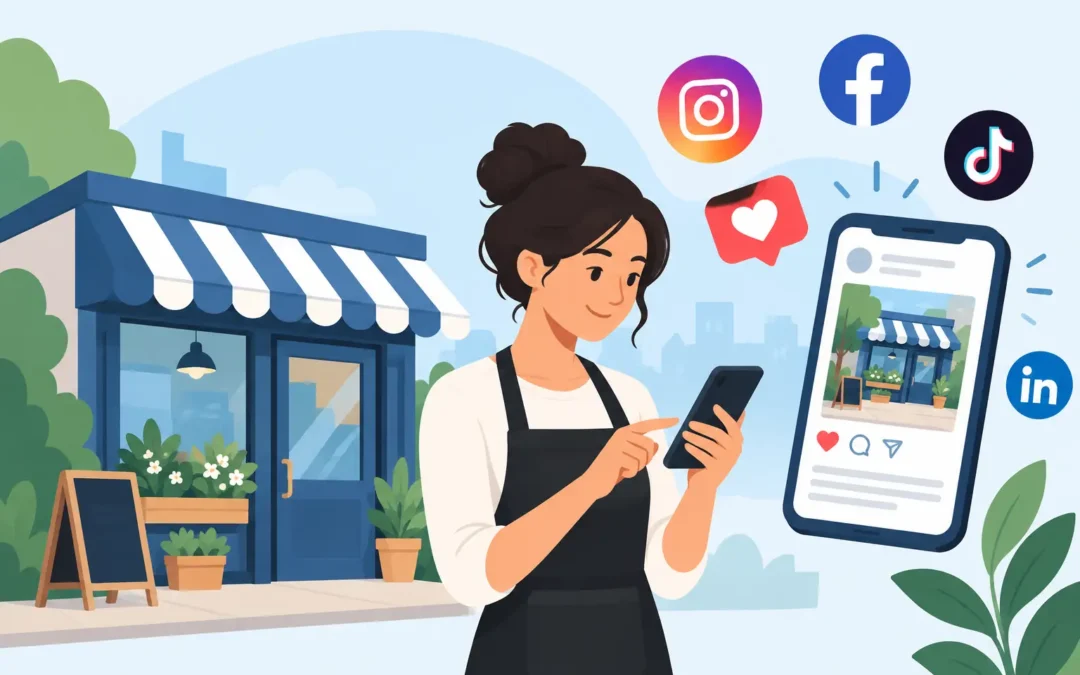
A customer is standing outside your storefront, checking your hours, reading recent reviews, and looking at your latest posts before deciding whether to walk in. That is why social media management for local businesses is more than posting a photo when someone remembers. It is part of how customers decide who feels active, trustworthy, and worth their time.
For a busy owner, the challenge is not understanding that social media matters. The challenge is finding time to plan content, answer messages, create professional visuals, and track whether the effort brings in actual business. A practical plan turns social channels from another item on the to-do list into a reliable way to stay connected with the community you serve.
Why Social Media Matters in the Local Buying Decision
Local customers often buy from businesses they recognize. They may not need your service today, but a helpful post, a short behind-the-scenes video, or a customer success story can keep your name familiar until they do. When the need arrives, familiarity can be the difference between a call to your business and a search for someone else.
Social media also gives customers signals that a website alone cannot always provide. Recent posts show that you are open, responsive, involved, and paying attention. A restaurant can show daily specials. A contractor can show work in progress. A medical practice can introduce staff and explain what a first appointment looks like. A retailer can highlight new inventory before it reaches the shelf.
The goal is not to chase every trend or collect vanity metrics. The goal is to earn local attention from people who can realistically become customers.
Start With the Platforms Your Customers Actually Use
Trying to be everywhere is a common and expensive mistake. Most small businesses are better served by choosing one or two channels they can maintain well. The right mix depends on your audience, your service, and the type of decision customers need to make.
Facebook remains useful for many community-based businesses because local residents use it to ask for recommendations, follow neighborhood news, discover events, and check business updates. Instagram is often a strong fit for visual businesses such as restaurants, salons, boutiques, fitness studios, home service providers, and real estate professionals. LinkedIn can make more sense for companies selling business-to-business services, professional expertise, or commercial solutions.
Short-form video can work across platforms, but it does not need to be flashy. A 20-second video of a technician explaining a common repair, a chef preparing a popular dish, or an owner welcoming customers to a new location can feel more credible than a polished commercial. Quality matters, but clarity and consistency matter more.
Before adding a platform, ask a simple question: will our customers see useful information here, and can we keep this channel current? If the answer is no, put your energy elsewhere.
Build Content Around Real Customer Questions
The best local content is usually close to the questions your team hears every week. What does the service cost? How long does it take? What should a customer bring? Which product is right for a particular situation? What makes your process different?
Answering these questions in plain language helps people before they are ready to call. It also gives your staff a library of posts they can reuse in conversations, emails, and sales follow-up.
A balanced monthly content plan often includes four types of posts:
- Helpful education that answers common questions or offers simple advice
- Proof of your work, such as testimonials, project photos, case examples, or before-and-after results
- Community-focused posts about local events, partnerships, team milestones, or causes you support
- Clear promotional posts that invite people to call, book, visit, request a quote, or take advantage of a timely offer
Not every post needs to sell directly. In fact, a nonstop stream of discounts can teach customers to wait for the next deal. Educational and community content earns attention, while promotional content gives that attention a next step.
Make Your Business Easy to Contact
A social profile should remove friction, not create it. Confirm that your business name, phone number, website address, service area, hours, and category are accurate everywhere. If your hours change for a holiday or event, update them promptly. Customers should not have to hunt for basic information or wonder whether a post from two years ago is still accurate.
Each post should also have a purpose. That does not mean every caption needs a hard sell. It means you should know what you want someone to do next. Depending on the post, that could be saving a tip, sharing it with a neighbor, sending a message, requesting an estimate, or visiting your location.
For local service businesses, messages can become a valuable source of leads. A quick, helpful response shows customers that they will be treated well after they hire you, too. Set expectations for response times, especially if messages arrive after business hours. An automated acknowledgment can help, but it should never replace a real follow-up.
Use Local Details Without Making Every Post About Location
Customers respond to businesses that feel connected to where they live. Mentioning neighborhoods, nearby events, local weather conditions, seasonal needs, and community partners can make your content more relevant. A Hampton Roads home services company, for example, might discuss storm preparation, humidity-related maintenance, or support for a local school event.
There is a balance. Local references should feel genuine, not forced into every sentence. The point is to show that your business understands the area and the people in it. That knowledge is difficult for a distant competitor to copy.
Community involvement also creates strong content when it is handled respectfully. Share why a partnership matters, recognize the people behind an event, and avoid turning every charitable effort into a sales pitch. Customers can tell the difference between support and self-promotion.
Create a Schedule Your Team Can Maintain
Consistency does not require posting several times a day. For many local businesses, two to four thoughtful posts per week is a solid starting point. A restaurant with daily specials or an event venue may need more frequent updates. A specialized contractor may get better results from fewer, more useful posts paired with strong project photos and timely responses.
Planning one month at a time makes the work more manageable. Begin with the dates that matter to your business: promotions, seasonal shifts, community events, new product arrivals, employee milestones, and holidays. Then add educational posts that address recurring customer questions.
Batching content saves time. Capture several photos and short videos during one project, one event, or one workday. Write captions in advance, then schedule posts when appropriate. Leave room for real-time updates so your page does not feel overly scripted.
Know When Organic Posts Need Paid Support
Organic social media builds familiarity, but it cannot reach every potential customer on its own. Platform algorithms decide who sees your posts, and even strong content may reach only a portion of your followers. This is where paid social advertising can be useful.
A modest, well-targeted campaign can put an offer, video, event, or service message in front of people within a defined geographic area. It can also help you reach audiences based on interests, household characteristics, or past interactions with your business. The right targeting depends on the service and the campaign goal. A broad audience may work for a community event, while a more focused audience may be better for a high-value service.
Paid ads are not a replacement for a healthy social presence. If a prospect clicks an ad and finds an outdated profile with unanswered questions, the campaign has to work harder. Think of advertising as an amplifier for a message and brand presence that are already in good shape.
Measure the Actions That Matter
Likes are encouraging, but they are not the full picture. A local business should pay closer attention to profile visits, direct messages, phone calls, website visits, appointment requests, offer redemptions, and the quality of leads coming from social media.
Ask new customers how they heard about you. Train your staff to record the answer consistently. Over time, you may find that one platform creates awareness while another produces more immediate calls. That is useful information when deciding where to spend time and budget.
Results can take time, especially for services customers do not need often. A homeowner may follow a roofing company for months before a storm creates an immediate need. Consistent social media keeps that business familiar before the urgent moment arrives.
When Managed Social Media Makes Sense
Some owners can manage their own accounts successfully, especially when they have a clear voice, a visual product, and someone who can respond consistently. Others find that social media slips behind urgent daily responsibilities. Posts become irregular, messages sit unanswered, and the page no longer reflects the quality of the business.
Managed social media is most valuable when it provides more than scheduled posts. Look for support with strategy, content planning, creative production, local targeting, message management, and reporting that connects activity to business goals. A partner should learn what makes your business different, respect your budget, and give you a plan you can understand.
Community Focus works with businesses that need that kind of hands-on marketing support without adding an in-house department. The best program is not the busiest one. It is the one that keeps your business visible to the right local audience and gives customers a clear reason to choose you.
Your next customer may be scrolling between errands, waiting in a school pickup line, or asking friends for a recommendation. Give them a current, helpful reason to remember your name when they are ready to act.
Recent Comments