
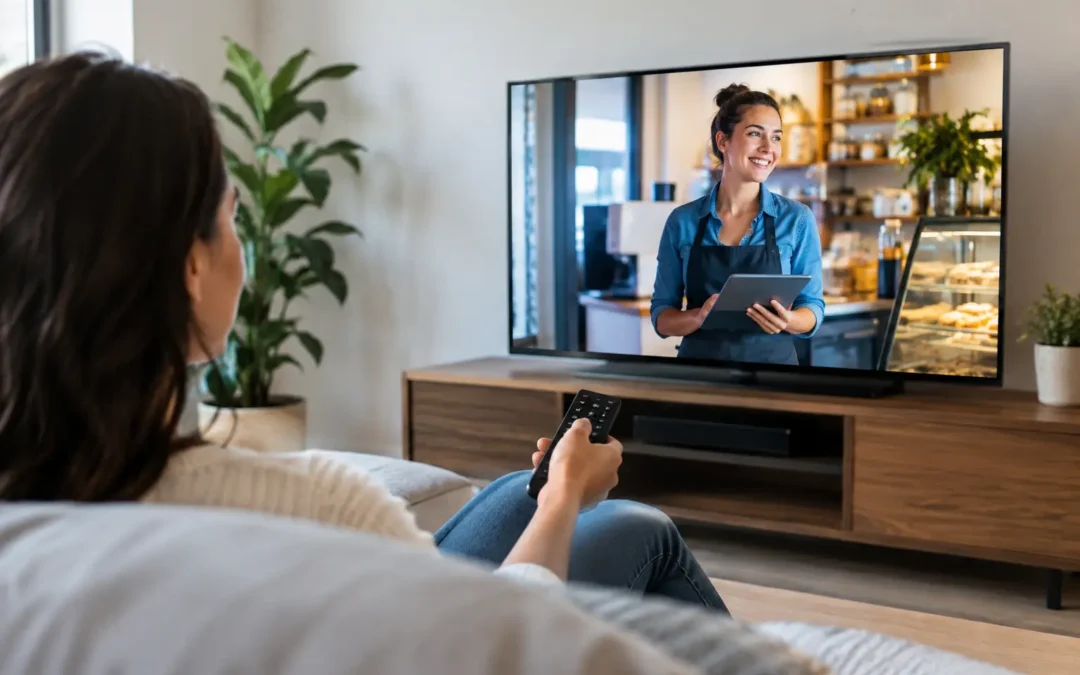
A family is watching a favorite show after dinner. A homeowner is comparing service providers from the couch. A shopper is deciding where to go this weekend. Those are valuable moments for a local business to be visible – and you do not need a national-brand budget to reach them.
Streaming TV advertising for local businesses puts professionally produced video ads in front of viewers using services and smart-TV apps. Instead of buying a broad television schedule and hoping the right people see it, you can focus your campaign around the communities, households, and customer profiles that matter most to your business.
For a busy owner, the appeal is simple: television still carries attention and credibility, while streaming provides more control over where your budget goes. The best campaigns are not about appearing everywhere. They are about appearing in the right places often enough for local customers to remember your name when they need what you offer.
Why Streaming TV Advertising Works for Local Businesses
Traditional television can build awareness, but it often requires buying a large geographic market, including viewers who will never become customers. Streaming television, also called connected TV or CTV, gives local businesses a more focused option. Your ad may appear during premium programming on popular streaming services, but the audience selection happens digitally.
That means a dentist can concentrate on households near the practice. A home-services company can prioritize homeowners in specific ZIP codes. A restaurant can build recognition around nearby neighborhoods before a seasonal promotion or busy weekend.
Streaming TV is especially useful when your business needs more than a quick click. Many local buying decisions take time. Someone may not need a roofer, attorney, financial advisor, or remodeling company today, but a clear, memorable video can help your business come to mind later.
The trade-off is that streaming TV is usually better at building awareness and consideration than producing an immediate flood of phone calls. It works best as part of a practical marketing plan that also makes it easy for interested customers to find you through search, social media, and a well-maintained website.
1. Start With the Customers You Need Most
A streaming campaign should begin with a business question, not a platform question. Are you trying to reach new families moving into the area? Higher-income homeowners? Adults within driving distance of your location? People likely to need a service in the next season?
Local targeting can combine geography with audience characteristics, such as household composition, interests, purchasing signals, or homeownership. The available options vary by market and media provider, so more targeting is not always better. If the audience becomes too narrow, your ads may not deliver enough impressions to build meaningful frequency.
A good plan finds the middle ground. Start with a realistic service area, then add audience filters that match your strongest customers. A pest-control company may focus on homeowners within a defined radius. A boutique fitness studio may focus on nearby adults with relevant wellness interests. A local retailer may choose a broader audience before the holidays, when more households are actively shopping.
Keep the message relevant to the group you are targeting. Running the same generic commercial for every audience makes the campaign less efficient. A viewer should quickly understand who you are, what you do, and why choosing a local business like yours makes sense.
2. Give Viewers a Clear Reason to Remember You
Your commercial does not need a movie-sized production budget. It does need a strong opening, a focused message, and a next step. Streaming viewers can be selective with their attention, so the first few seconds matter.
For most local businesses, a 15- or 30-second ad works well. Lead with a customer problem or a benefit that feels immediate. Show your people, your location, your finished work, or the result customers can expect. Then make the call to action easy to understand: visit your website, call your office, schedule an estimate, or stop by.
Avoid packing every service, special offer, and company detail into one spot. A commercial that tries to say everything usually leaves viewers with nothing memorable. One clear promise is stronger than a long menu of information.
Authenticity matters, particularly in community-based marketing. Stock footage can support an ad, but real staff members, recognizable locations, and local customer experiences can make the message more believable. If you serve Hampton Roads or another close-knit market, viewers often respond well when they can see that your business is part of the community, not just advertising into it.
3. Set a Budget That Can Build Frequency
One ad view rarely changes a buying decision. Streaming TV works through repeated, relevant exposure. Your budget should allow enough time and enough impressions for the right audience to see the message more than once.
Rather than spending heavily for one short burst, many local businesses benefit from a steady campaign over several weeks or months. This gives the media time to build awareness while allowing you to review performance and adjust creative or targeting when needed.
The right budget depends on your market size, target audience, campaign length, and competition. A narrowly targeted campaign may cost more per thousand impressions than a broad one, but it can reduce wasted reach. A larger service area may need a larger investment simply because more households need to be reached.
Be careful about chasing the lowest possible cost. Cheap impressions are not useful if they are delivered outside your service area or to people unlikely to use your business. The goal is efficient reach, not just a large number on a report.
4. Connect Streaming TV to the Rest of Your Marketing
Streaming TV can make your other marketing channels work harder. When viewers see your commercial and later search for your business category, a well-managed Google Ads campaign can help you stay visible. When they visit your website, clear service pages, contact forms, and phone numbers help turn interest into action.
Social media can also reinforce your video message. The commercial itself may be adapted into shorter social clips, while posts give customers a place to see reviews, recent work, staff updates, and local involvement. Consistent visuals and language across channels help people recognize your business faster.
This is where many owners lose momentum. They invest in an ad but send viewers to an outdated website, an unmonitored social page, or a generic landing page that does not answer basic questions. Before launching, check that your contact information is current, mobile-friendly, and easy to find.
Community Focus often helps clients coordinate video production, streaming placement, website support, and digital advertising as one program. That coordination matters because the customer does not experience your marketing in separate channels. They simply see your business, look you up, and decide whether taking the next step feels easy.
5. Measure What Streaming TV Can Actually Tell You
Streaming reporting can show how many impressions were delivered, how much of the target area was reached, how often viewers were exposed to the campaign, and how the budget was spent. Some campaigns can also report website visits or other digital actions connected to ad exposure, depending on the setup and available data.
Those numbers are useful, but they should be interpreted in context. A service business with a long sales cycle may see an increase in branded searches, direct website traffic, and better-informed callers before it sees a direct conversion report. A restaurant running a short promotion may care more about local reach during a specific period.
Ask a few practical questions every month: Are we reaching the right geography? Is the campaign delivering enough frequency? Are branded searches, website traffic, calls, or form submissions moving in the right direction? Do customers mention seeing us on TV or online?
No single metric tells the full story. Combine campaign reporting with what your front-line staff hears from customers. A simple question at the point of contact – “How did you hear about us?” – can reveal patterns that dashboards miss.
When Streaming TV May Not Be the First Move
Streaming TV is not automatically the best first investment for every business. If your website is difficult to use, your service area is extremely small, or you need immediate leads from people actively searching today, improving your website and search visibility may come first.
It can also be a poor fit if you cannot handle additional inquiries. A campaign should support growth, not create customer-service problems because calls go unanswered or appointments are unavailable.
Still, for local businesses that have a clear offer, reliable operations, and a need for stronger name recognition, streaming television can be a smart way to compete. It brings a familiar, trusted format into a more targeted and manageable marketing plan.
The most effective campaign is one that feels local, says something worth remembering, and leads customers to a business that is ready to help. Start with the audience you serve best, build a message around their needs, and give your marketing enough consistency to earn a place in their minds.
Recent Comments